Building trades
Plumbers, electricians, joiners, roofers, landscapers: your customers want to see finished jobs, check that you cover their area and request a quote straight away. The site organises your work by type of job and by town.
A showcase website, or brochure website, gives your business a clear address online: what you do, who for, where, and how to reach you. We design and code your small business website to measure, then put it live within 10–15 days, ready to be found on Google and on the map.
Plenty of independent businesses make do with a social media page or an old site thrown together in a hurry. The result: outdated information, wrong opening hours and no simple way to ask for a quote. Visitors hesitate, then call someone else. A showcase website fixes this by bringing the essentials of your offer together in one place, kept up to date and easy to read on a phone.
This format suits tradespeople, shops, independent professionals, associations and small companies selling a local service or a craft. There is no need for an online shop or a customer area: the job is to convince in a few seconds, show proof (photos of past work, reviews, references) and make getting in touch effortless.
A good showcase site has few pages, each with a precise purpose. Common mistakes: a home page that talks about the company instead of the customer, copy borrowed from a competitor, heavy images that slow everything down, a contact form buried at the very bottom. We start from your customers and the questions they ask themselves before calling.
A professional showcase website suits any business that sells a service or a skill rather than products online.
Plumbers, electricians, joiners, roofers, landscapers: your customers want to see finished jobs, check that you cover their area and request a quote straight away. The site organises your work by type of job and by town.
Boutiques, restaurants, hair salons, beauty studios: up-to-date hours, menu or range, directions and booking matter more than anything. People often check your site standing up, on their phone, minutes before walking in.
Lawyers, physiotherapists, osteopaths, architects, accountants: the site sets out your specialisms clearly, reassures people before a first appointment and respects the communication rules of your profession.
Consultants, trainers, artists, clubs, small service firms: a simple site that explains what you offer, shows who you are and gives people a good reason to write to you rather than someone else.
A clear scope, agreed with you from day one, for a site that stands on its own.
Home, services, past work, about and contact: a short structure in which every page answers a question your future customer is asking.
We interview you about your trade, then write direct copy using the words your customers actually type into the search engine.
Meta tags, structured data, sitemap and a Google Business Profile linked to the site, so you show up in searches across your area.
A tap-to-call button on mobile, a short quote form or a booking link: a visitor who has made up their mind always finds a way to reach you, on every page.
Optimised images, lean code, readable contrast and keyboard navigation: a responsive website that feels good on an old phone as well as a large screen.
On launch day, everything is in place, tested, and yours.
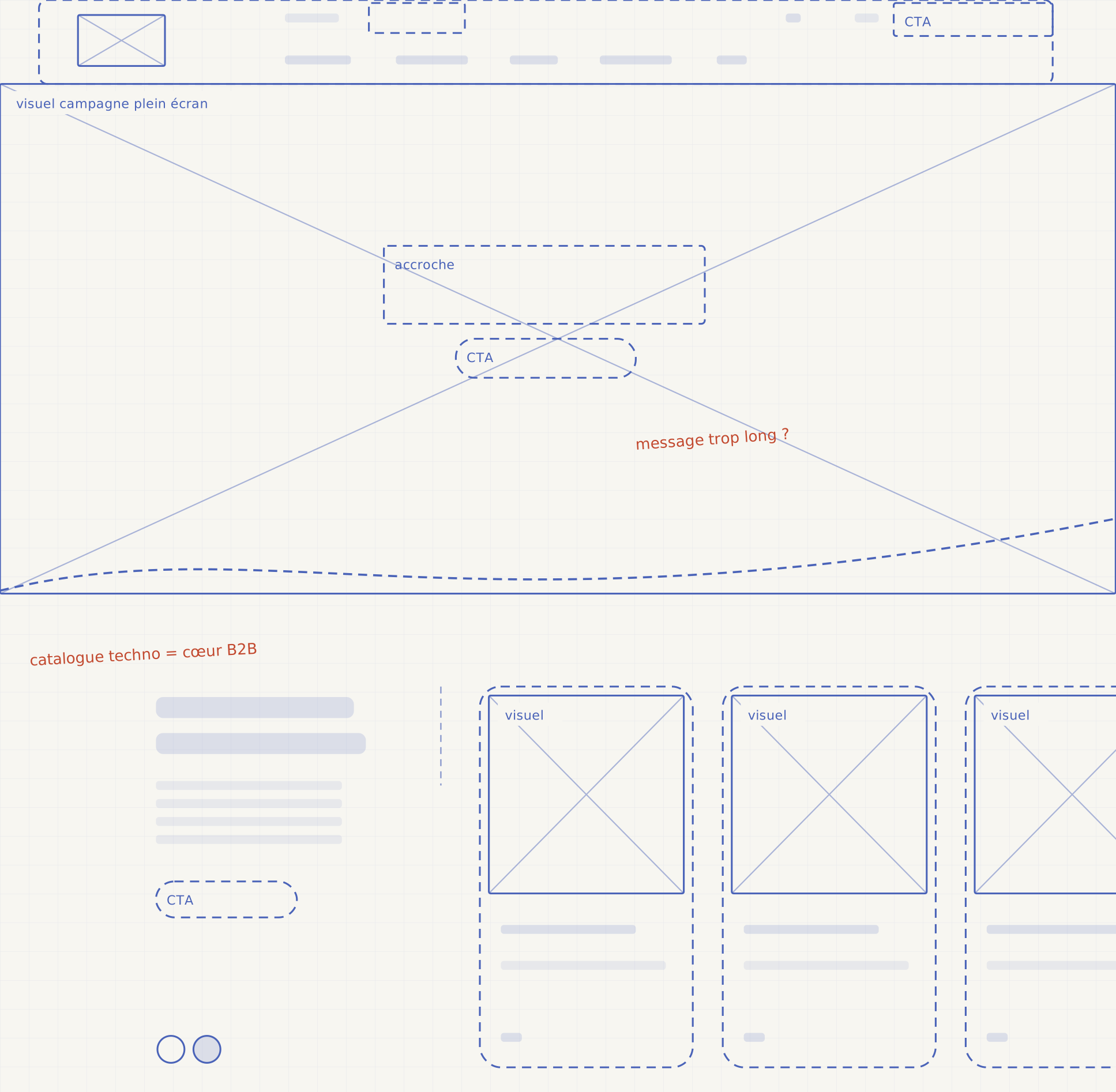
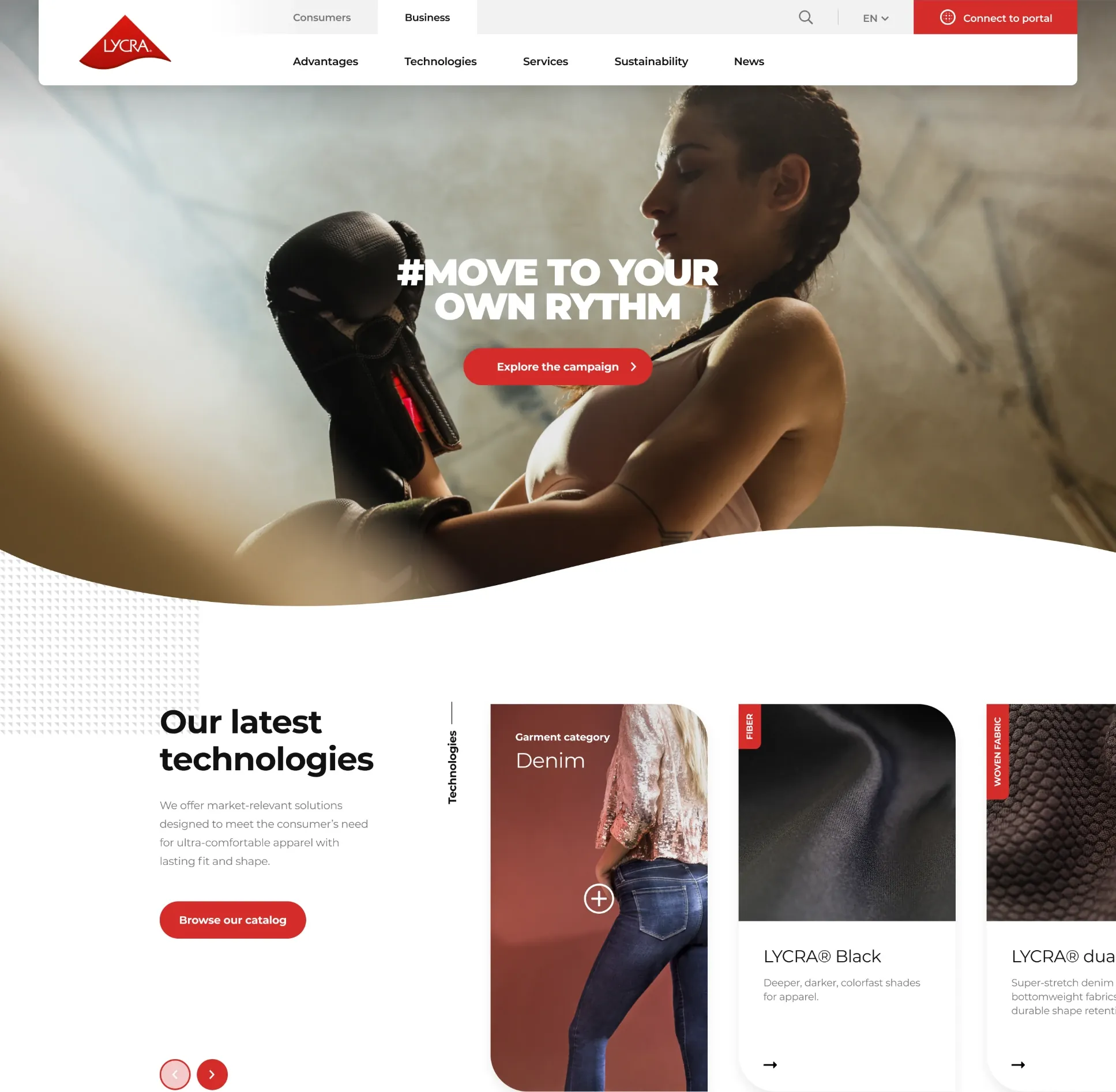
Even for a handful of pages, we first draw the structure in grey, with no colours or photos, so the message can be judged on its own. The site of The LYCRA Company, built for professionals, went through this very step: drag the slider to compare the draft with the published version.
A short format, because a showcase website does not need months of meetings.
A conversation to understand your business, your customers, your area and what sets you apart. On your side, you gather photos, logo and references.
Site structure and page wireframes: together we agree on what each page says and in what order, before any visual design starts.
The mock-ups take on your colours and identity, the copy is finalised, then the site is built in Next.js.
Domain connected, form tested, Google profile linked, analytics installed: you receive a site that is ready to work for you.
What we explain to every tradesperson, shopkeeper or freelancer before we start, to avoid the mistakes that cost the most.
People often ask how much a small business website costs. The honest answer depends on three things: how many pages are genuinely useful, how much copy needs writing and which features must be connected (booking, quotes, several languages). Five well-written pages beat fifteen empty ones. Compare the cost over several years too: platform subscriptions and paid plugins add up. Every project starts with a 30-minute call, followed by a detailed, costed proposal.
A website builder such as Wix, Squarespace or Jimdo lets you get started on your own, at the price of a site that looks like everyone else’s and depends on the subscription. WordPress is flexible, but a bought theme and a dozen plugins soon slow pages down and demand constant updates. A custom-coded site, like those we build in Next.js, loads faster and does not break with every update. The right choice depends on your needs, not on fashion.
Google measures your visitors’ real experience through Core Web Vitals: how fast the main content appears, how stable the page stays while loading and how quickly it responds when someone taps a button. On a showcase site, the usual culprits are oversized photos, sliders, chat widgets and third-party scripts. We compress images, limit external tools and check every page on an ordinary phone, not just on a desktop screen.
AI tools can churn out pages in seconds, and they all read alike. Google and your customers spot them: hollow phrases, no concrete detail, no proof. What makes the difference is your trade vocabulary, your projects, your real photos and the questions people ask you on the phone. We gather all of that in an interview, then write. Answer engines such as ChatGPT or Google’s AI Overviews also prefer to cite a precise page over generic text.
A professional website must display legal notices, a privacy policy and, if it sets non-essential cookies, a consent mechanism. Since June 2025, the European Accessibility Act also places accessibility requirements on certain online services; micro-enterprises providing services are exempt, but readable contrast, alt text and keyboard navigation help every visitor. We build them in from the mock-up stage; legal sign-off remains with your own adviser.
An honest comparison: each option has its place, depending on your time, your means and your ambitions on Google.
| Criterion | Brutux Studio | Website builder (Wix, Squarespace) | WordPress theme |
|---|---|---|---|
| Design | Bespoke, shaped by your customers and your identity | Template to customise, often recognisable | Bought theme, adapted more or less closely |
| Copywriting | Written with you after an interview | Yours to write | Depends on the provider, often yours to supply |
| Speed and Core Web Vitals | Lean code, no unnecessary plugins | Reasonable, with the platform’s own code | Variable, weighed down by theme and plugins |
| Local SEO | Tags, structured data and Google profile set up | Basic settings, done yourself | Depends on plugins and how they are configured |
| Upkeep | Very little; updates can be left to the studio | Handled by the platform | Regular updates to core, theme and plugins |
| Ownership | You own the code | Site tied to the subscription | Code is yours, theme is licensed |
| Timeline | 10–15 days | Depends on your availability | Depends on the provider |
Showcase website design: answers to the questions we are asked.
Allow 10–15 days between our first conversation and launch. That timeframe assumes your photos, logo and practical details arrive early enough; we send you a precise checklist at the start.
Usually between four and eight: home, services, past work, about and contact. A very local business may add a page for each town it covers, a practice a page for each specialty. It all depends on what your customers need to know before they call.
These tools can help you get started, but they often load a lot of unnecessary code and end up all looking alike. A custom-coded site loads faster, gives your SEO a better foundation and does not depend on any platform subscription.
Your Maps ranking depends mostly on your Google profile: category, reviews, photos and a consistent address. The site reinforces it by repeating the same contact details and describing your services by area. We set up both together.
No. You share your knowledge of the trade in an interview, we write, and you review and correct before launch. If copy already exists, we rework it so it is more direct and better understood by Google.
A brochure website presents your business and prompts contact: a call, a quote, a booking. An e-commerce site takes orders, with a catalogue, basket, payment and stock management. Our speciality is showcase and company websites, not large online shops: to sell hundreds of products, a dedicated platform is often the right tool. We can, however, review the checkout journey of an existing shop through our UX audit.
A freelance web designer or web developer can be a great fit for a small site. Check that they cover copywriting, local SEO and launch, not just the visuals. At Brutux Studio, you work directly with the founder, with no middlemen, a written method and a stated timeline.
Yes, for whatever changes often: opening hours, news, photos, current offers. The site is designed to need very little upkeep. You can also leave updates to us if you would rather not touch it.
No, that is not what we do. We build the site, its organic SEO and your Google profile, which work without an advertising budget. If you launch campaigns, the site will be ready for them: clear pages, tracked forms, analytics in place.
Not native apps for the App Store or Google Play. A well-built showcase website works perfectly on a phone, with nothing to install. If what you need is closer to a tool (complex bookings, a customer area, case tracking), see our custom business software page: those web applications work on mobile too.
30 minutes to talk about your project, in Thonon or by video call. I’ll tell you honestly what will make the difference.
Book 30 minutes ↗