Private banks and wealth managers
Case summaries, meeting preparation, regulatory monitoring: useful applications, provided client data stays under control and every use is documented.
As an AI consultant to Geneva companies and institutions, Brutux Studio helps leadership teams adopt artificial intelligence without compromising the discretion their reputation rests on. Uses, tools and data protection rules are addressed together from the very start of the engagement, not tacked on at the end.
In Geneva, private banks, wealth managers, commodity traders and fiduciaries handle information every day that clients entrust to them in strict confidence. For these firms, AI performance matters less than three questions: where the data travels, who can access it, and how to prove that to a client or an auditor.
The Swiss FADP (nLPD), the revised federal data protection act that came into force in 2023, requires transparency and security in the processing of personal data. Organisations that also work with the European Union deal with the GDPR and are following the phased implementation of the EU AI Act. Our work as an AI consultant is to turn these requirements into concrete choices: hosting, contracts, logging, access rights.
The NGOs and international institutions based in the city share these concerns, with multilingual teams and large volumes of reports, minutes and position papers on top. Summarising, working translations and document search offer tangible gains there, provided usage rules are written down, known to everyone and matched to the sensitivity of each category of document.
Organisations for which discretion is not up for negotiation.
Case summaries, meeting preparation, regulatory monitoring: useful applications, provided client data stays under control and every use is documented.
Contracts, reports, correspondence in several languages: AI lightens reading and drafting, with strict classification of what may be submitted to it.
Reports, minutes, position papers: summarising and document search for multilingual teams, within their own framework.
Retail, trades, services: simple uses and proportionate governance, without machinery designed for large institutions.
Data protection is part of the specification, not an appendix.
An inventory of the information your teams would like to submit to AI, graded by sensitivity, with what is permitted for each category.
Solutions compared by hosting location, contractual terms and traceability, so you keep only those that meet your obligations.
An assistant that queries your internal documents while respecting existing access rights: each person sees only what they are authorised to consult.
A session for the board of directors or executive management: opportunities, risks, responsibilities and the decisions to make on the use of AI.
Documents that serve as much for deciding as for accounting for your decisions.
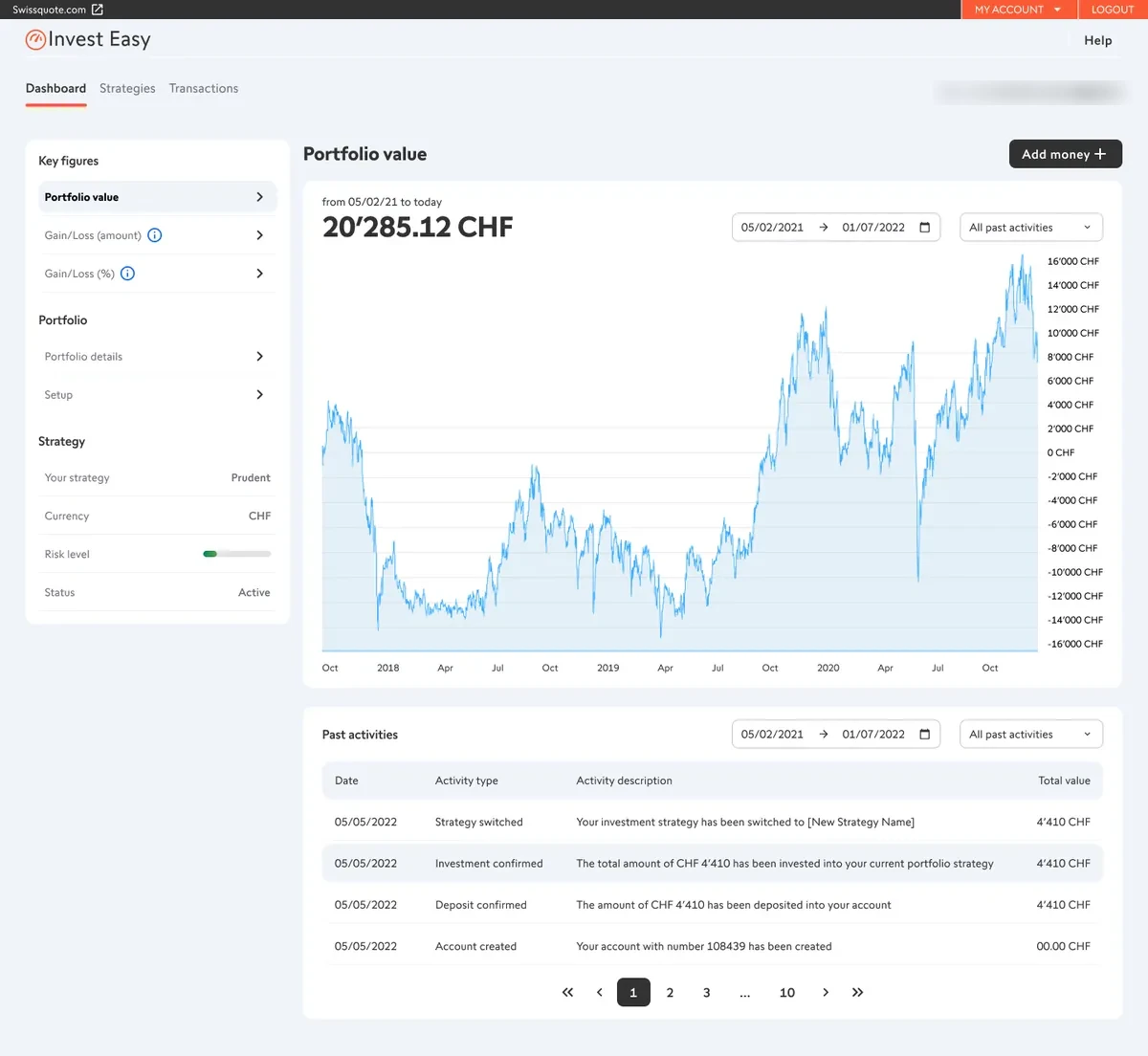
Geneva leadership teams want to innovate without weakening their clients’ trust. Swissquote did so with Invest Easy, an automated investing product designed from scratch within a regulated banking framework. Victor Michel, the studio’s founder, balanced a simple journey against banking requirements and documented every edge case for the developers. The same balance guides our AI engagements in Geneva.
The questions Geneva leadership teams keep asking before allowing generative AI.
The first step is not technical. It means listing the information your teams would like to submit to AI and classifying it: public, internal, confidential, secret. For each category, you decide what is allowed, with which tool and under what control. This simple classification then guides supplier choice and the drafting of the usage policy, and it is easy for every employee to remember.
Hosting location is only one parameter among several. Also relevant are the law governing the contract, what the provider may do with your data, retention periods and the ability to audit. A Swiss-hosted solution is not automatically the best, nor a foreign one automatically ruled out. We compare these criteria for each data category, then record the choice made and the reasons for it, so it can be justified later.
In Geneva, being careful is not enough: you have to be able to show it to a client, an auditor or a board. Credible AI governance comes down to a few elements: an inventory of tools and uses, named owners, logging of sensitive access and a policy everyone knows. We help put them in place without weighing down day-to-day work.
Many Geneva organisations process data on people living in Switzerland as well as in the European Union. They therefore deal with the Swiss FADP, the GDPR and, for their EU activities, the AI Act. Our recommendations translate these three frameworks into concrete choices; fine legal interpretation stays with your lawyers or your data protection adviser, with whom we are happy to work in parallel.
From Thonon-les-Bains, Geneva is within easy reach for interviews with your teams and training workshops; everything else moves forward online, on the tools you approve.
AI consultant Geneva: answers to the questions we are asked.
Yes. Brutux Studio, a French company founded by Victor Michel in Thonon-les-Bains, works with French clients and organisations in French-speaking Switzerland alike. We build the Swiss FADP into our recommendations and align our confidentiality commitments with your requirements.
Not with just any tool. It takes suitable hosting and contracts, minimised or anonymised data and traceable usage. For some information, the right answer is still not to submit it to AI at all.
We do not sell any tools. We compare the options available, hosted in Switzerland, in the European Union or elsewhere, and help you decide based on your obligations, your contracts and how sensitive the data is.
Yes, on AI use, drafting internal rules and training staff. Their own legal framework is taken into account together with their competent departments, which we do not replace.
Yes, within a framework. Business plans do not come with the same terms as personal accounts. You need to choose the right plan, define which data is allowed and train your teams. For the most sensitive information, other solutions, or no AI at all, remain preferable.
AI whose hosting, data and supplier dependency you control: models run in Switzerland or Europe, open models installed on your own infrastructure, protective contracts. Each option has its cost and its limits; we compare them against your actual needs.
Yes. From Thonon-les-Bains, we come to Geneva for interviews, workshops and debrief sessions. Interim exchanges happen online, on the tools your organisation approves.
An AI strategy and governance engagement takes 4–8 weeks, depending on how many teams are involved and how complex your constraints are. Priority rules, such as the usage policy, can be in place within the first few weeks.
30 minutes to talk about your project, in Thonon or by video call. I’ll tell you honestly what will make the difference.
Book 30 minutes ↗