Victor Michel designed Invest Easy, the robo-advisor of Switzerland’s leading online bank, from scratch: user research, testing, BDD specifications and the final interface.
FinTech · Online banking
560 000+
active clients at the bank
0→1
robo-advisor designed from scratch
BDD
specifications ready for developers
Lead UX · Business analysis · User testing
The context.
Swissquote is Switzerland’s leading online bank. Listed on the SIX Swiss Exchange, it serves more than 560,000 active clients. Between 2022 and 2023, Victor Michel, now the founder of Brutux Studio, worked on several product topics there. The most significant one is called Invest Easy: a robo-advisor meant to open automated investing to people who do not see themselves as financial-market experts.
At the outset, the product did not exist. The work had to start from a first hypothesis, test it against real investor profiles and end with an interface ready for production. All of it inside the regulatory framework of a Swiss bank, where the simplicity users expect can never be bought with a lack of rigour.
Victor led the design end to end, in constant contact with the Product Manager, the Product Owner and the development team: gathering needs, running co-design workshops, wireframing, user testing, designing the final interface and writing the functional specifications, from the first workshop through to production.
The challenge: A robo-advisor promises simplicity: a few questions, a strategy, and savings are invested automatically. Behind that promise, a bank still has to meet precise regulatory requirements and explain clearly what it offers. The challenge was to make investing understandable for a beginner without making it simplistic, then to turn those banking constraints into a smooth journey that developers could build without grey areas.
The approach.
01
Framing with the product team
The first weeks went into laying the foundations with the PM and the PO: who Invest Easy is for, what the product has to accomplish, which profiles to serve first. This shared framing kept the team from designing too early and gave everyone the same definition of success.
02
Listening to future investors
Interviews with beginner and intermediate profiles showed what holds people back from investing. The barriers were of three kinds, cognitive, emotional and regulatory, and each called for a different answer in the journey. These conversations set the order of priorities: what to explain, reassure or simplify first.
03
Co-designing with the PM, PO and developers
Co-design workshops brought the PM, the PO and the development team together around the screens. Trade-offs between a simple journey and banking requirements were made there, with the people able to judge their technical cost. Deciding together kept unpleasant surprises out of the development phase.
04
Prototyping fast, testing early
Several scenarios first took the form of low-fidelity wireframes, put through quick guerrilla tests, before moving on to high-fidelity mockups in Figma. Testing sketches made it easy to drop an idea without regret. Qualitative user testing then accompanied every stage of the design.
05
Writing BDD specifications for developers
Every feature was described in Gherkin-style BDD specifications: acceptance criteria, expected behaviour, edge cases. Business analysis then becomes a set of verifiable rules that the technical team can read, build and test without guesswork.
06
Staying on until production
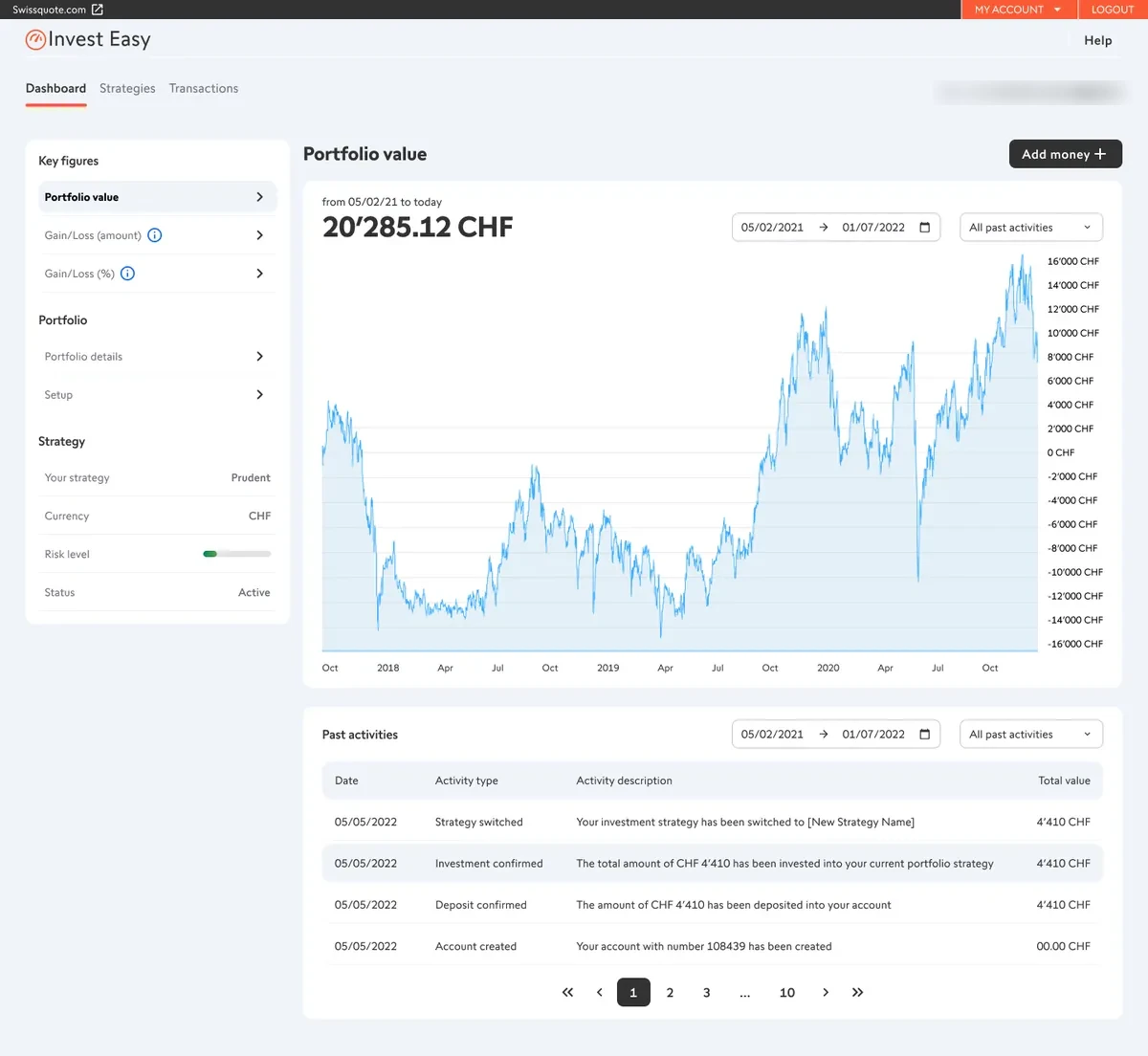
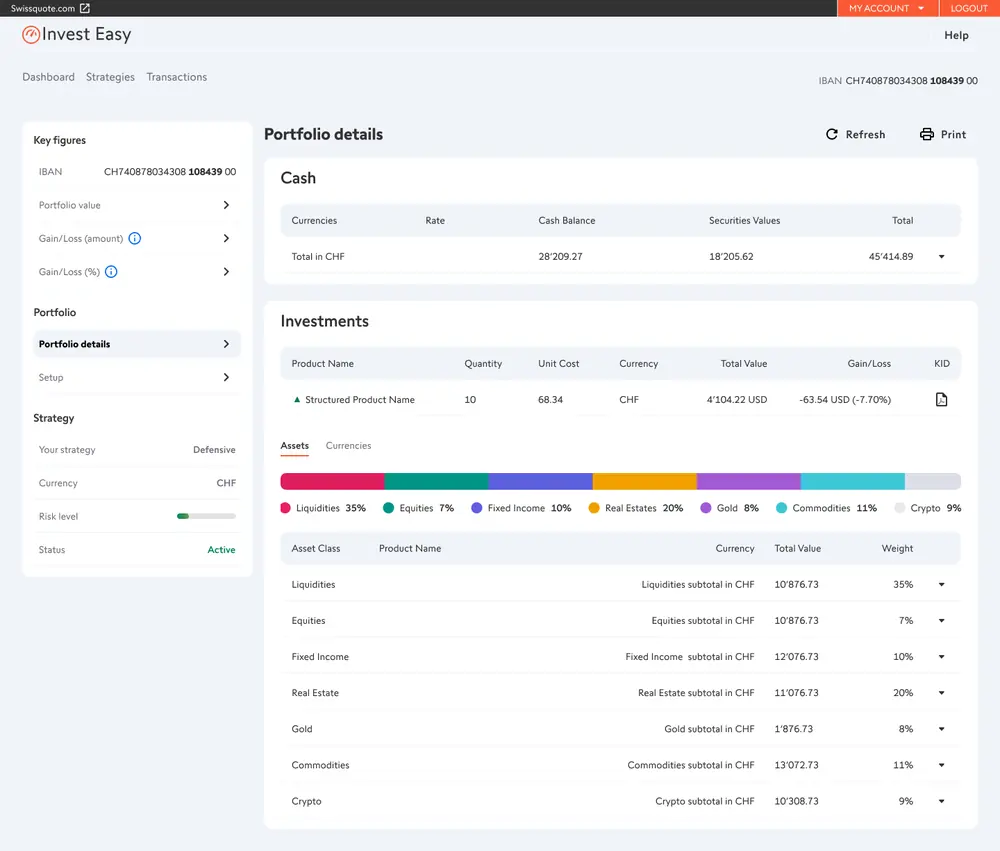
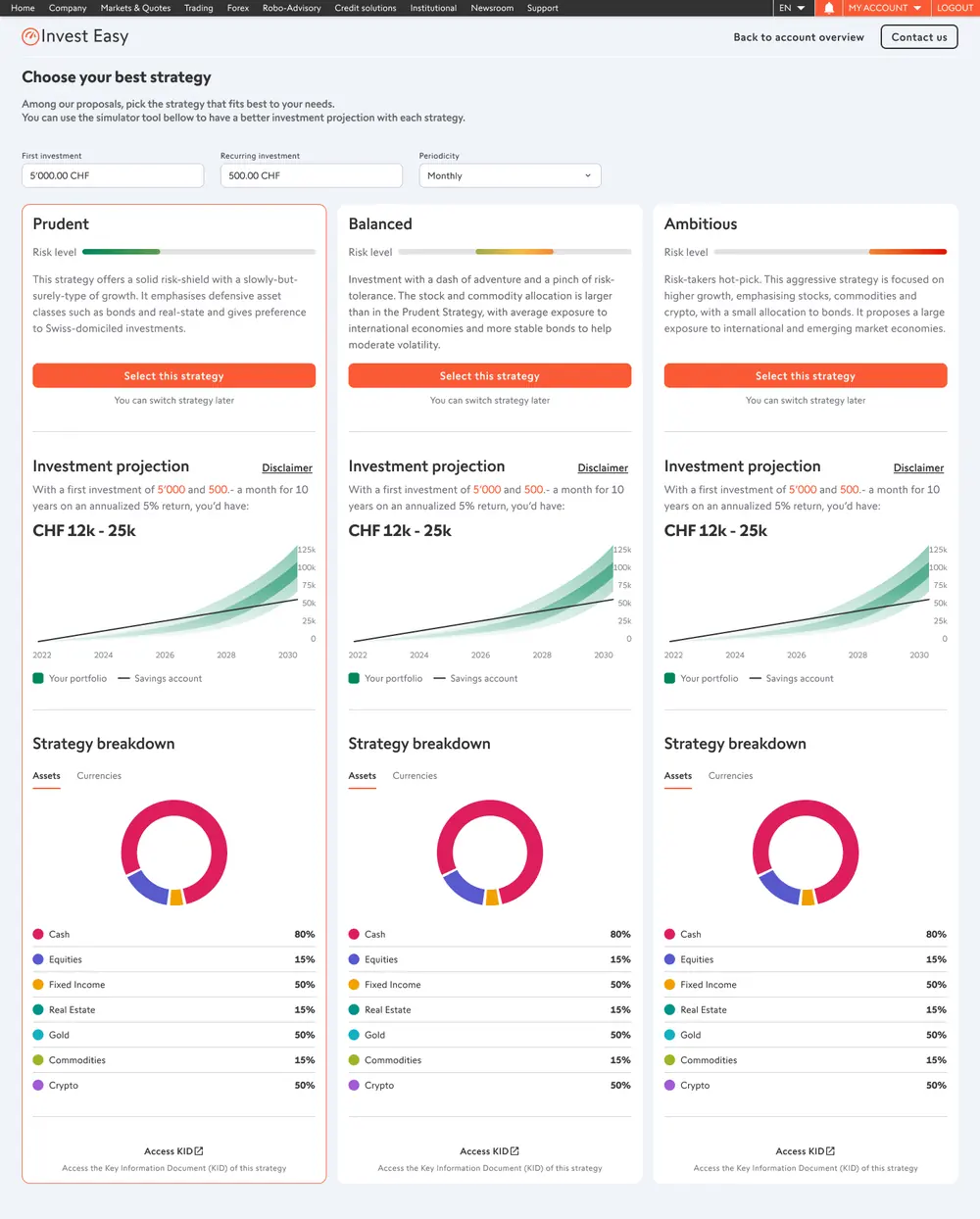
Victor designed the final interface and kept refining it with the developers’ feedback until launch. The portfolio dashboard, its detail view and the investment strategy selection all came out of this continuous work.
The screens.
Swissquote Invest Easy: portfolio detail screen
Swissquote Invest Easy: choosing an investment strategy
What this project taught
Trust is not something a final screen can display: on Invest Easy, it was built step by step, from the first workshop to the last test. In fintech UX design, the designer’s job is not to hide the complexity of a financial product but to make it readable. Explaining without talking down, simplifying without bending the rules: that standard applies to any product where users commit their money or their data.
What it means for your project
B2B SaaS companies live with the same tensions: a product full of business rules, users in a hurry, developers who need unambiguous specifications. At Brutux Studio, Victor applies this method when building or redesigning a SaaS product: user interviews, prototypes tested early, BDD specifications ready for the technical team. On an existing product, a UX audit also shows where business complexity is holding adoption back.