Victor Michel revived a B2B self-service dashboard MSC’s clients were ignoring: field observation, co-design with pilot clients and a gradual rollout.
Maritime logistics · B2B
800
vessels (world’s largest shipping line)
B2B
self-service dashboard for clients
Lead UX · Field observation · Product strategy
The context.
MSC is the world’s largest shipping line, with a fleet of around 800 vessels. Its business clients, importers, exporters and freight forwarders, still arranged much of their shipping by phone and email, with all the workload that implies on both sides.
To change that, MSC had launched a first self-service app. Months after release, it was still barely used, and nobody really knew why. Clients kept calling and emailing as before.
Victor Michel, now the founder of Brutux Studio, led the UX design of the relaunch. Rather than redesigning the interface straight away, he proposed an approach the product team had not considered: go and watch clients at work before touching a single screen, then build the solution with them rather than deliver it ready-made.
The challenge: When a B2B dashboard fails to find its audience, the first reflex is to rework the interface. Yet an app can be properly designed and still miss how the work is really done. The challenge was twofold: understand what logistics teams actually did day to day, then make the case that observation was the shortest path to adoption.
The approach.
01
Shadowing logistics teams
Victor organised and personally ran field observation over several days, at several clients. He followed their real workflows, the tools they used every day and the workarounds they had invented to make up for what was missing. Those workarounds said more about real needs than any requirements document.
02
Isolating the critical use cases
Analysing these observations brought out a few priority use cases: tracking containers, finding documents, being warned of a delay with a concrete action attached. Everything else could wait. Focusing the product on the essentials was the condition for adoption.
03
Co-designing with pilot clients
The findings were shared in prioritisation workshops bringing together the product team and pilot clients. Through participatory mockups and feature trade-offs, the solution was built with its future users, who became its first advocates.
04
Testing in real conditions
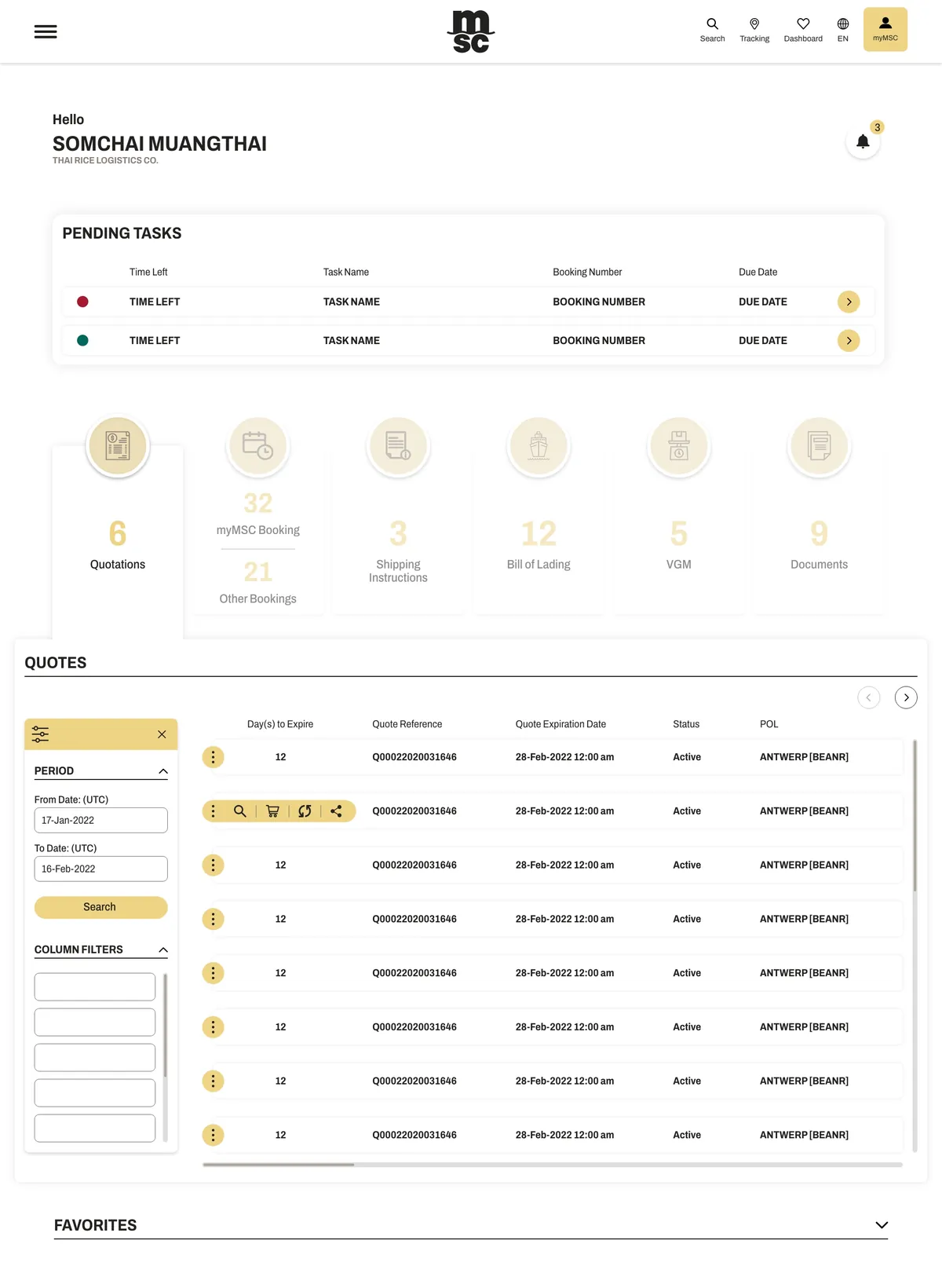
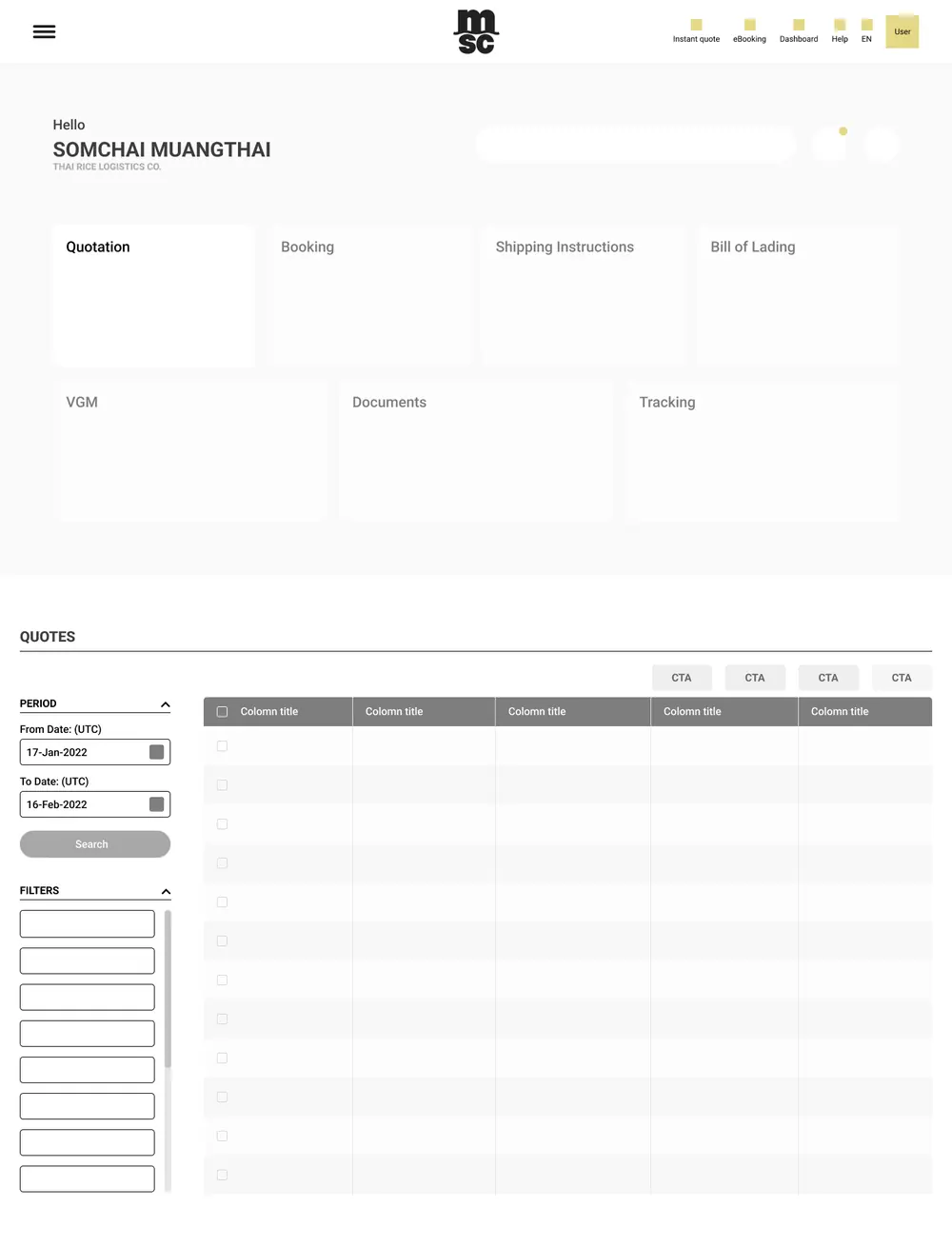
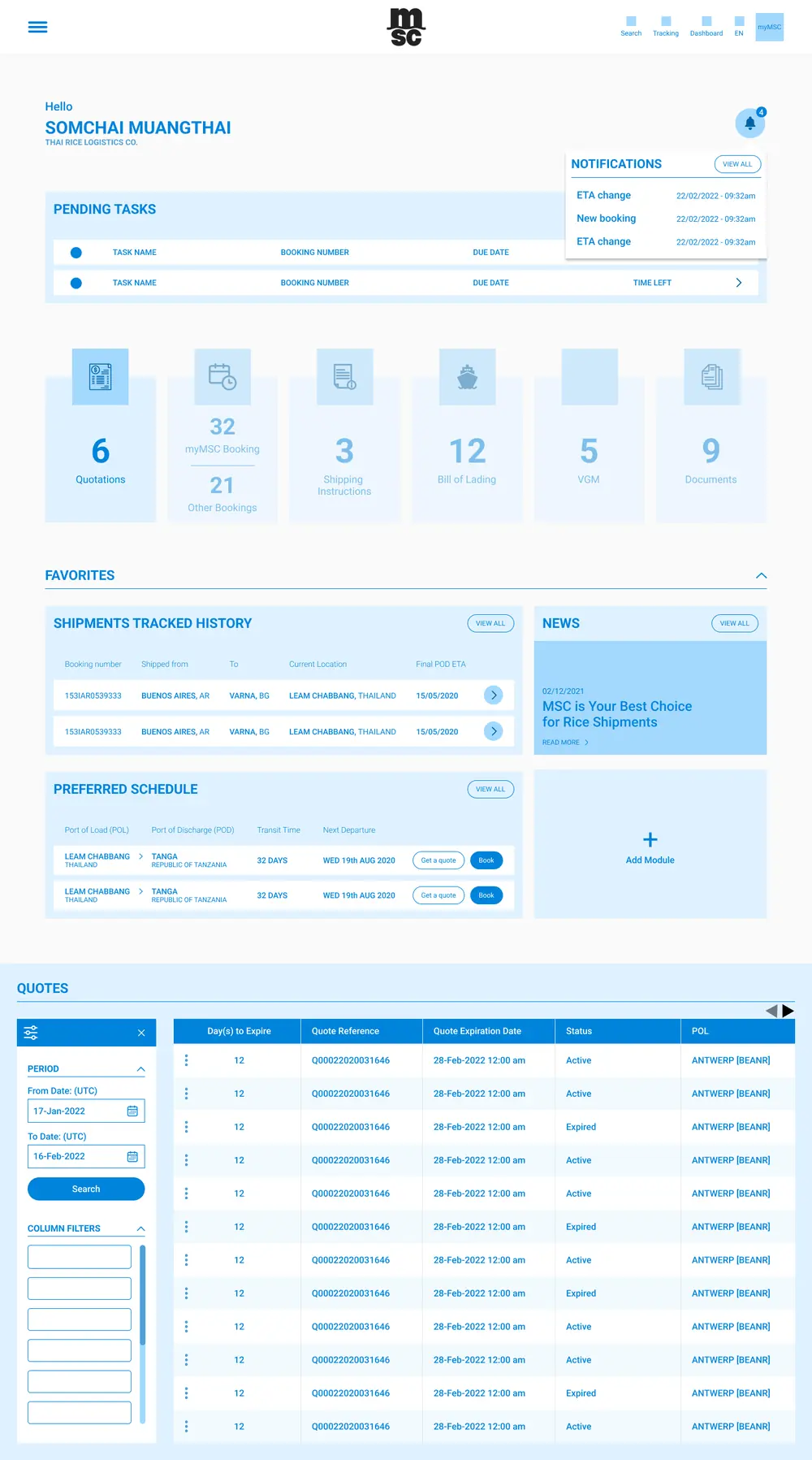
A high-fidelity prototype was then tested on site, in real working situations. The dashboard’s zoning and wireframes were grounded in what the field had shown, screen by screen, and the tests revealed which information had to be readable at a glance. Testing where the work happens, with the noise, the interruptions and the shared screens, shows what no meeting room ever will.
05
Rolling out in stages
Rollout was gradual, starting with a first group of clients, with weekly iterations at the beginning. That pace made it possible to fix things quickly, watch the effect of each change and widen access once the product had settled.
The screens.
MSC: dashboard zoning, layout of the information blocks
MSC: wireframe of the self-service dashboard
What this project taught
The best redesign sometimes means redesigning almost nothing. The existing app was not bad: it had been designed without watching people work. A few days of observation yielded more actionable insight than months of support tickets. Since then, Victor has argued for the same rule with every product team: before adding features, understand the real process.
What it means for your project
A B2B SaaS product or business application that struggles to get adopted often suffers from the same problem. Before proposing a redesign, Brutux Studio starts with a UX audit that includes, whenever possible, field observation and interviews with real users. The aim: identify the few use cases that truly matter, design them with the teams concerned, then roll out in stages rather than all at once.